

Pharmaceutical
Current location:Home > Pharmaceutical
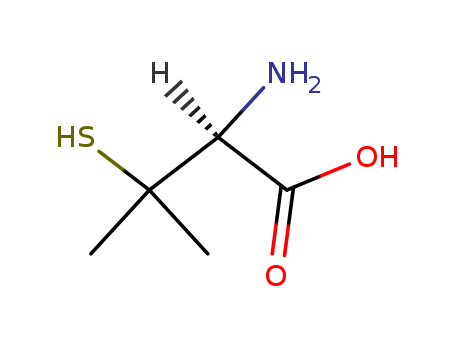
Manufacturer supply high quality 3,3-Dimethyl-D(-)-cysteine 52-67-5 with ISO standards
- Molecular Formula: C5H11NO2S
- Molecular Weight: 149.214
- Appearance/Colour: white powder
- Vapor Pressure: 0.022mmHg at 25°C
- Melting Point: 210 °C (dec.)(lit.)
- Refractive Index: -63 ° (C=1, 1mol/L NaOH)
- Boiling Point: 251.772 °C at 760 mmHg
- PKA: pKa 7.83±0.01(H2O,t =37±0.05,I=0.15)(Approximate)
- Flash Point: 106.068 °C
- PSA: 102.12000
- Density: 1.205 g/cm3
- LogP: 0.80700
3,3-Dimethyl-D(-)-cysteine(Cas 52-67-5) Usage
|
Biochem/physiol Actions |
Penicillamine is a characteristic degradation product of penicillin type antibiotics. One atom of copper combines with two molecules of penicillamine. Penicillamine reduces excess cystine excretion in cystinuria. This is by disulfide interchange between penicillamine and cystine, which results in formation of a readily excreted penicillamine-cysteine disulfide. Penicillamine interferes with the formation of cross-links between tropocollagen molecules and cleaves them when newly formed. Penicillamine lowers IgM rheumatoid factor and depresses T-cell activity. |
|
Mechanism of Action |
Penicillamine chelates heavy metals including copper, iron, lead, and mercury, forming stable complexes that can then be excreted by the kidneys. One gram of penicillamine has the potential to combine with 200 mg of copper. When administered to patients with Wilson's disease, however, a 1 gm dose of penicillamine results in excretion of only 2 mg of copper.Penicillamine complexes with cystine, forming penicillamine-cysteine disulfide. 3,3-Dimethyl-D(-)-cysteine is more soluble than cysteine-cysteine disulfide (cystine), thereby reducing the levels of free urinary cystine below those considered crucial to the formation of cystine stones. Existing stones also may undergo dissolution during penicillamine therapy.Penicillamine's antirheumatic action may be due, in part, to the drug's ability to inhibit the formation of collagen. Penicillamine also appears to depress circulating levels of IgM rheumatoid factor, but, in contrast to cytotoxic immunosuppressants, the drug does not reduce the absolute levels of serum immunoglobulins. Penicillamine depresses T-cell activity but not B-cell activity. |
|
Pharmacokinetics |
Penicillamine is administered orally. The distribution of penicillamine is not well known, but it is believed to cross the placenta. Protein binding is about 80%, primarily to albumin. The drug also binds to erythrocytes and macrophages. Penicillamine appears in the plasma as free penicillamine, penicillamine disulfide, and cysteine-penicillamine disulfide. A small fraction of the dose is metabolized in the liver to s-methyl-D-penicillamine. Drug excretion is primarily renal, mainly as disulfides. One study determined that, of a total dose of penicillamine, approximately 50% was excreted in the urine and 20% in the feces. Approximately 30% of the drug remained unaccounted for. When prolonged treatment is stopped, there is a slow elimination phase lasting 4—6 days. |
|
Side Effects |
More commonFeverjoint painlesions on the face, neck, scalp, and/or trunkskin rash, hives, or itchingswollen and/or painful glandsulcers, sores, or white spots on lips or in mouthLess commonBloody or cloudy urineshortness of breath, troubled breathing, tightness in chest, or wheezingsore throat and fever with or without chillsswelling of face, feet, or lower legsunusual bleeding or bruisingunusual tiredness or weaknesshttps://www.mayoclinic.org/drugs-supplements/penicillamine-oral-route/side-effects/drg-20065377https://www.drugs.com/mtm/penicillamine.html |
|
Reference |
A. J. Dixon, J. Davies, T. L. Dormandy, E. B. Hamilton, P. J. Holt, R. M. Mason, M. Thompson, J. C. Weber, D. W. Zutshi, Synthetic D(-)penicillamine in rheumatoid arthritis. Double-blind controlled study of a high and low dosage regimen, Annals of the Rheumatic Diseases, 1975, vol. 34, pp. 416-421 V. D. Steen, T. A. Medsger, G. P. Rodnan, D-Penicillamine Therapy in Progressive Systemic Sclerosis (Scleroderma): A Retrospective Analysis, 1982, vol. 97, pp. 652-659 |
|
Safety Profile |
Poison by intraperitoneal route. Moderately toxic by subcutaneous and intravenous routes. Mildly toxic by ingestion. An experimental teratogen. Human systemic effects by ingestion: agranulocytosis, dermatitis, fever, hemorrhage, increased body temperature, dermatitis, leukopenia, proteinuria, thrombocytopenia. Human teratogenic effects by an unspecified route: developmental abnormalities of the craniofacial areas, skin, and skin appendages, and body wall. Experimental reproductive effects. Questionable human carcinogen producing leukemia. Mutation data reported. Used in the treatment of rheumatoid arthritis, metal poisonings, and cystinuria. When heated to decomposition it emits very toxic fumes of NOx and SOx. See also MERCAPTANS. |
|
Drug interactions |
Potentially hazardous interactions with other drugs Antipsychotics: avoid with clozapine (increased risk of agranulocytosis). Sodium aurothiomalate: increased risk of haematological toxicity |
|
Metabolism |
Penicillamine undergoes limited metabolism in the liver, to S-methyl penicillamine. It is mainly excreted in the urine as disulfides, along with some S-methyl penicillamine and unchanged drug; a small amount may be excreted in the faeces |
|
Purification Methods |
The melting point of D-(-)-penicillamine depends on the rate of heating (m 202-206o is obtained by starting at 195o and heating at 2o/minute). It is soluble in H2O and alcohols but insoluble in Et2O, CHCl3, CCl4 and hydrocarbon solvents. Purify it by dissolving it in MeOH and adding Et2O slowly. Dry it in vacuo and store it under N2. [Weight et al. Angew Chem, Int Ed (English) 14 330 1975, Cornforth in The Chemistry of Penicillin (Clarke, Johnson and Robinson eds) Princeton Univ Press, 455 1949, Review: Chain et al. Antibiotics (Oxford University Press) 2 1949, Polymorphism: Vidler J Pharm Pharmacol 28 663 1976]. The D-S-benzyl derivative has m 197-198o (from H2O), [] D 17 -20o (c 1, N NaOH), -70o (N HCl). [Beilstein 4 IV 3228.] |
|
uses |
D-Penicillamine is used as an antirheumatic to reduce the number of T cells, to inhibit microphages by reducing the activity of Interleukin and rheumatoid factor, and to prevent crosslinking of the collagen. It is used as a chelating agent in Wilson's disease.It is used mainly as chelating agent in heavy metal poisoning as in lead, mercury and copper poisoning. It is also used for therapy in progressive systemic sclerosis. |
|
Definition |
ChEBI: An optically active form of penicillamine having D-configuration. Pharmaceutical form (L-form is toxic) of chelating agent used to treat heavy metal poisoning. |
|
Brand name |
Cuprimine(Merck); Depen (Medpointe). |
|
General Description |
D-Penicillamine contains a β-lactam chemical structure. |
InChI:InChI=1/C5H11NO2S/c1-6(2)4(3-9)5(7)8/h4,9H,3H2,1-2H3,(H,7,8)
52-67-5 Relevant articles
-
Lodemann, Edgar
, p. 462 - 466 (1979)
d-Penicillamine is used against a variet...
Organic total synthesis method of D-penicillamine
-
Paragraph 0023; 0036-0037; 0046-0047, (2020/11/23)
The invention discloses an organic total...
A NOVEL, FEASIBLE AND COST EFFECTIVE PROCESS FOR THE MANUFACTURE OF D – PENICILLAMINE
-
Page/Page column 13, (2018/08/12)
Disclosed herein is a novel synthesis fo...
Immunomodulatory peptides
-
, (2014/12/12)
The invention relates to peptides deriva...
Glycation Cross-link Breakers to Increase Resistance to Enzymatic Degradation
-
, (2013/12/03)
The present invention relates to a metho...
52-67-5 Process route
-
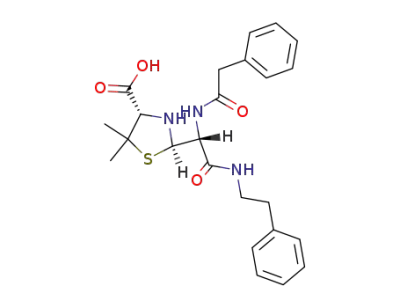
-
121766-89-0
benzylpenicilloic acid α-phenylethylamide

-
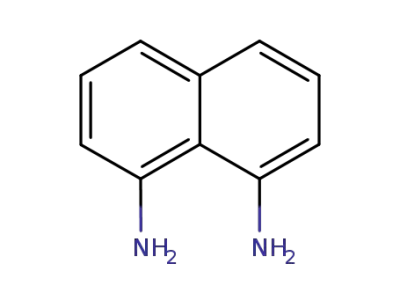
-
479-27-6
naphthalene-1,8-diamine

-

-
204-02-4
1-H-perimidine
-
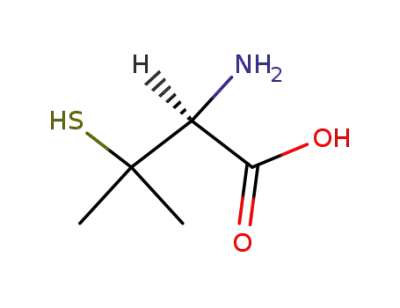
-
52-67-5
3,3-dimethyl-D-cysteine
-
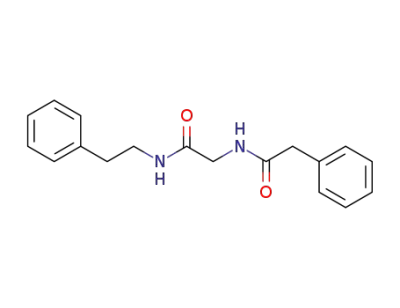
-
102016-26-2
phenaceturic acid α-phenethylamide
Conditions
| Conditions | Yield |
|---|---|
|
In
water; acetic acid;
for 2h;
Heating;
|
74%
69% 85% |
-
-
121766-89-0
benzylpenicilloic acid α-phenylethylamide
-
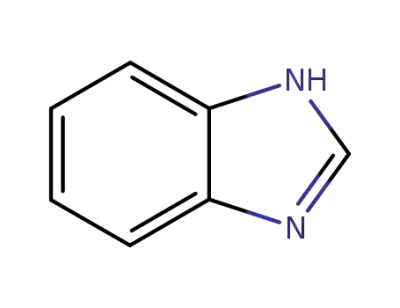
-
51-17-2,79351-71-6
benzoimidazole
-
-
52-67-5
3,3-dimethyl-D-cysteine
-
-
102016-26-2
phenaceturic acid α-phenethylamide
Conditions
| Conditions | Yield |
|---|---|
|
With
1,2-diamino-benzene;
In
water; acetic acid;
for 1.5h;
Heating;
|
91%
59% 87% |
52-67-5 Upstream products
-
15537-71-0
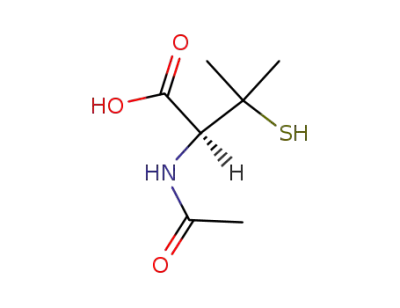
N-acetyl-3,3-dimethyl-D-cysteine
-
911446-29-2
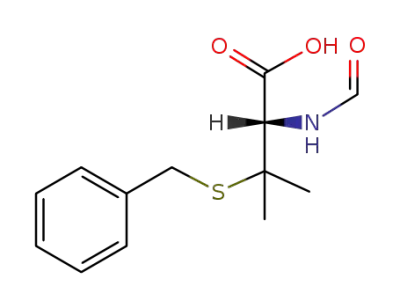
S -benzyl-N -formyl-D-penicillamine
-
54536-37-7
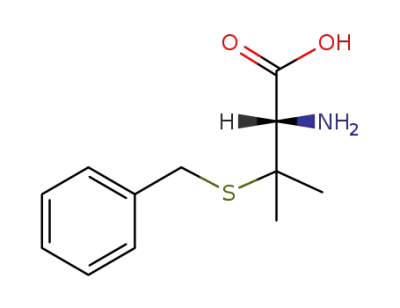
S -benzyl-D-penicillamine
-
61-33-6
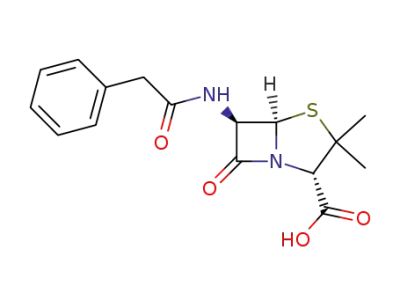
penicillin G
52-67-5 Downstream products
-
22916-26-3
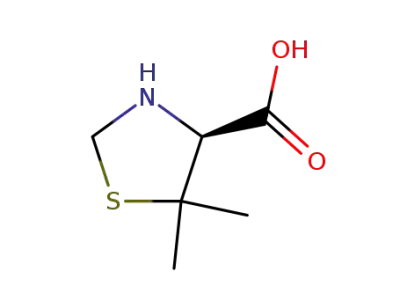
(S)-5,5-dimethyl-1,3-thiazolidine-4-carboxylic acid
-
61029-86-5
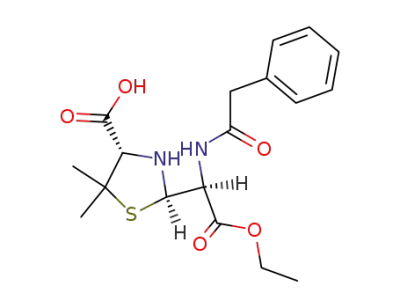
(4S )-2t -[(S )-ethoxycarbonyl-(2-phenyl-acetylamino)-methyl]-5,5-dimethyl-thiazolidine-4r -carboxylic acid
-
63474-91-9
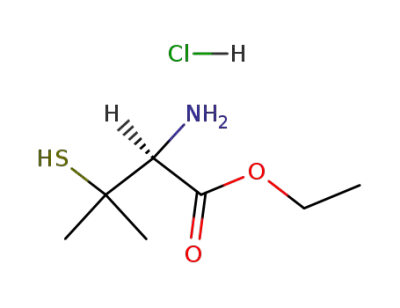
ethyl ester of (S)-penicillamine
-
18840-45-4
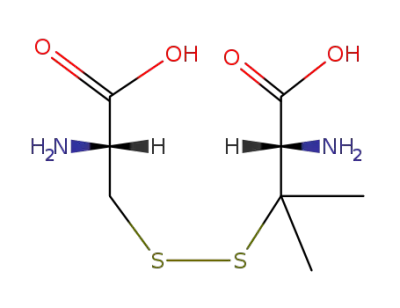
L-Cystein-D-penicillamin-disulfid
WANT TO
PURCHASE